Have you been involved in an accident? Please contact us immediately for a FREE CONSULTATION

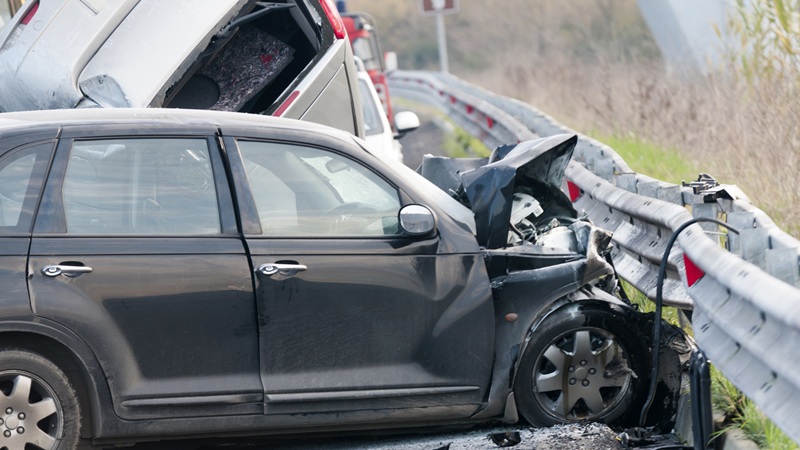
Philadelphia, PA (May 3, 2026) — A Philadelphia police officer was hospitalized on Sunday, May 3, following a collision while on duty in North Philadelphia. The incident occurred at approximately 4:00 p.m. near the intersection of Broad Street and Toronto Street.
The crash involved a Philadelphia Police dirtbike patrol officer and a U-Haul truck. Emergency responders arrived on the scene to provide medical aid to everyone involved. Details regarding the officer's condition have not yet been released, and it is currently unknown if the driver of the U-Haul or any other individuals sustained injuries.
Accident reconstruction teams are currently processing the scene to determine the sequence of events and the cause of the collision.
We hope everyone affected by this accident makes a full and swift recovery.
When an accident in North Philadelphia involves a police officer or a municipal vehicle, the legal process differs significantly from a standard car crash. In Pennsylvania, these cases are governed by specific rules regarding government liability and strict filing deadlines.
Here is what you need to know if you've been involved in a crash of this type in North Philadelphia:
1. Understanding the Political Subdivision Tort Claims Act
Under Pennsylvania law, government entities generally enjoy "sovereign immunity," which protects them from being sued. However, the Political Subdivision Tort Claims Act provides specific exceptions. One of the primary exceptions is the "vehicle liability" exception.
If a government employee (like a police officer) is found negligent while operating a motor vehicle, the municipality can be held liable for resulting injuries and damages.
2. The Strict Six-Month Notice Requirement
Perhaps the most critical factor in a case is the notice deadline. Under 42 Pa. C.S. § 5522, you must provide a formal written "Notice of Claim" to the city within six months of the accident date. This is much shorter than the standard two-year statute of limitations for personal injury.
Failing to file this notice correctly can result in the permanent dismissal of your case, regardless of how much evidence you have of the city's fault.
3. Proving Negligence in Emergency Situations
If the officer involved was in the process of a high-speed pursuit or responding to an emergency call with sirens and lights activated, a higher legal standard may apply. In many cases, you must prove the officer acted with "reckless disregard" for the safety of others, rather than simple negligence.
However, if the officer was on a routine patrol, the standard negligence rules usually apply. An attorney will review the officer's dispatch logs and vehicle data to determine their operational status at the time of the impact.
4. The Role of Comparative Negligence
Pennsylvania follows a Fair Share Act and a 51% Comparative Negligence rule. You can recover damages as long as you are not more than 50% at fault for the crash. Because the city will have its own team of investigators on the scene immediately, having independent legal representation is vital to ensuring that the evidence is professionally preserved and analyzed.
Accidents involving police vehicles and government liability require immediate action to meet strict 2026 legal deadlines. Our attorneys at Edelstein Martin & Nelson handle all sorts of personal injury cases across Pennsylvania and can provide you with the legal help that you need during a challenging time.
You can call 888-630-4409 to speak with our Philadelphia truck accident lawyer and have your case reviewed by our legal team.

Lehigh County, PA (October 6, 2024) – According to officials who responded to the site...

Honey Grove, PA (February 1, 2026) – A fatal motor vehicle collision shut down Route...

York County, PA (November 25, 2024) – According to PennDOT officials, a multi-vehicle crash was...
Note: Independent sources were used to create this post, including news stories, witness statements, social media posts, and first-hand accounts about the accident and injuries involved. As a result, the details of the accident that are represented have not been independently verified by our own writing staff. If you find incorrect information or would like the post to be removed, please contact us immediately. We will correct the inaccurate information or will remove the post completely.
Injured in a Similar Accident?
If you or a loved one was injured in an accident like the one described above, you may have legal options. Contact our team today for a free consultation and case evaluation. Call us at 888-630-4409 to discuss your situation.




Email: [email protected]
Edelstein Martin & Nelson Disclaimer | Privacy Policy | Terms and Conditions | © Copyright | All Rights Reserved.