Have you been involved in an accident? Please contact us immediately for a FREE CONSULTATION
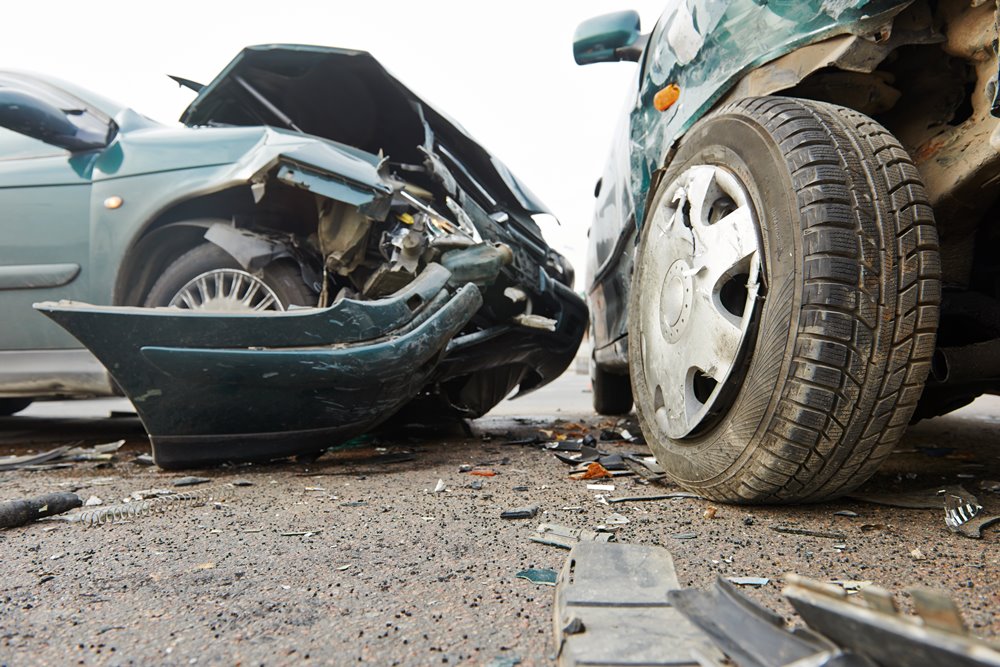

After a crash in Philadelphia, fault is determined by investigating the evidence, applying Pennsylvania's traffic laws, and calculating each party's share of responsibility under the state's modified comparative negligence rule.
Pennsylvania follows a modified comparative negligence standard under 42 Pa. Cons. Stat. Section 7102. Under that rule, your recovery is reduced by whatever percentage of fault is assigned to you, and if you are found 51 percent or more responsible, you recover nothing. That means the number that gets assigned to you after a crash on Roosevelt Boulevard or Broad Street is not just a formality; it directly controls how much money you receive.
Philadelphia logged more traffic-related fatalities than any other county in Pennsylvania in 2023, representing 11.2 percent of all statewide crash deaths, according to PennDOT's 2023 Crash Facts. With that volume of crashes, insurance companies have experienced adjusters whose job is to build a case that you share the blame.
Fault in a Philadelphia car accident is rarely decided by a single piece of evidence. Attorneys and investigators build a picture from multiple sources assembled as quickly as possible after the crash. Key evidence includes the official police report and any citations issued at the scene, traffic camera and surveillance footage from nearby businesses, eyewitness statements gathered while memories are fresh, photos of vehicle damage and final rest positions, event data recorder (black box) downloads from the vehicles involved, and expert accident reconstruction when the sequence of events is disputed.
Philadelphia's dense street grid creates unique evidentiary challenges. Cameras exist on nearly every commercial block, but footage is typically overwritten within 24 to 72 hours. Acting quickly to preserve that footage can make or break a fault dispute.
Rear-end crashes: Pennsylvania law creates a rebuttable presumption that the following driver bears fault for a rear-end collision. The following driver can rebut that presumption only by showing the lead driver made a sudden, unexpected stop or had faulty brake lights. On I-76 and I-95, where sudden lane merges are common, these disputes come up frequently.
Intersection crashes: Red-light violations and failure-to-yield collisions at busy Philadelphia intersections require traffic camera footage, witness accounts, and sometimes engineering analysis of signal timing. Complex multi-leg intersections at Grant Avenue and Red Lion Road on Roosevelt Boulevard are well-documented crash sites.
Pedestrian and cyclist crashes: Drivers generally owe a higher duty of care to pedestrians and cyclists under Pennsylvania law, but fault can still be shared. A pedestrian who jaywalks in a non-crosswalk location may be assigned partial fault; a cyclist riding against traffic may be too. The key is whether the assigned percentage stays below the 51 percent bar.
Multi-vehicle pileups: When three or more vehicles are involved, each driver's insurer will argue the others are more responsible. Reconstruction experts who can sequence the collision chain are often essential in these cases.
| Scenario | Your Fault % | Effect on Recovery |
| Another driver ran a red light; you had the right of way | 0% | Full recovery |
| You were speeding slightly; other driver failed to yield | 20% | Recovery reduced by 20% |
| Disputed intersection; fault is split roughly even | 50% | Recovery reduced by 50%; you still recover |
| Evidence shows you were primarily responsible | 51% or more | No recovery |
Insurance adjusters often try to push injured claimants toward or past the 51 percent threshold. A documented evidence file and attorneys with deep Philadelphia courtroom experience make a real difference.
Philadelphia Police Department crash reports are a starting point, not the final word on fault. Officers document what they observe and may issue citations, but those findings are not binding in civil litigation. An attorney can challenge a police report's conclusions by presenting additional evidence the responding officer did not have access to, such as footage from a private camera across the street or a witness who arrived after the report was filed.
Conversely, if the other driver received a citation and was later convicted, that conviction can be used as evidence of negligence in your civil case.
Who decides fault after a car accident in Philadelphia?
Insurance adjusters make an initial determination, but fault is ultimately decided by a court or jury if the case goes to litigation. Your attorney presents evidence to challenge any unfair allocation.
Can I recover if I was partially at fault in Philadelphia?
Yes, as long as your share of fault is below 51 percent. Your recovery is reduced proportionally under Pennsylvania's modified comparative negligence rule (42 Pa. Cons. Stat. Section 7102).
Does a police report determine who is at fault?
No. A police report documents observations made at the scene but is not binding in a civil case. Additional evidence can supplement or contradict its findings.
What if there were no witnesses to my accident?
Other evidence, including traffic cameras, vehicle damage patterns, skid marks, and event data recorders, can establish fault without eyewitness testimony.
How quickly should I contact a lawyer after a Philadelphia crash?
As soon as possible. Evidence like surveillance footage is deleted on short cycles, and witness memories fade quickly. Early action preserves your ability to build a strong fault case.
What is the deadline to file a car accident lawsuit in Pennsylvania?
Two years from the date of the accident under 42 Pa. Cons. Stat. Section 5524. Missing that deadline typically bars your claim entirely.
If you were injured in a Philadelphia crash and want to understand how fault will be assessed in your case, contact Edelstein Martin & Nelson, LLP at our Philadelphia office. We offer free consultations 24 hours a day, seven days a week.
Last reviewed: June 2026
This post was reviewed by Lawren Nelson, licensed in Pennsylvania since 1996.
This content is for informational purposes only and does not constitute legal advice. Reading this post does not create an attorney-client relationship. Every case is different; contact a licensed Pennsylvania attorney to discuss the specific facts of your situation
Accidents involving government agencies raise different legal questions than reguar personal injury cases. Whether the...

Pennsylvania follows a strict liability dog bite statute. What this means is that a dog’s...

Railroad crossings pose a serious risk to motorists, pedestrians, and cyclists throughout Pennsylvania. With over...
Note: Independent sources were used to create this post, including news stories, witness statements, social media posts, and first-hand accounts about the accident and injuries involved. As a result, the details of the accident that are represented have not been independently verified by our own writing staff. If you find incorrect information or would like the post to be removed, please contact us immediately. We will correct the inaccurate information or will remove the post completely.
Injured in a Similar Accident?
If you or a loved one was injured in an accident like the one described above, you may have legal options. Contact our team today for a free consultation and case evaluation. Call us at 888-630-4409 to discuss your situation.



Email: [email protected]
Edelstein Martin & Nelson Disclaimer | Privacy Policy | Terms and Conditions | © Copyright | All Rights Reserved.