When you place a loved one in a nursing home or assisted living facility, you trust that they'll receive compassionate, professional care. Unfortunately, nursing home abuse and neglect remain widespread problems across Pennsylvania.
Nursing home abuse happens far more often than most people realize. From understaffed facilities in King of Prussia to corporate-owned chains prioritizing profits over patient safety, vulnerable seniors across Montgomery County and Pennsylvania face physical abuse, neglect, emotional trauma, and financial exploitation every day.
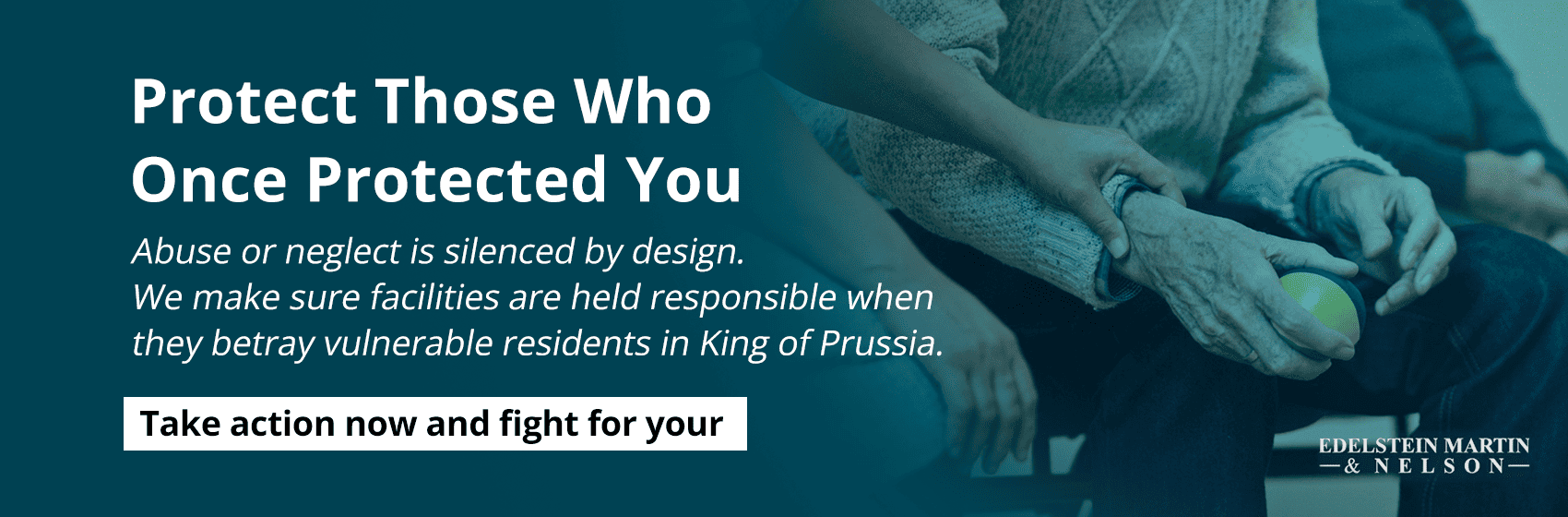
The warning signs aren't always obvious. A bruise might be explained away as a fall. Weight loss could be attributed to normal aging. Withdrawn behavior might seem like depression. But when these signs appear together or when facilities repeatedly offer vague explanations, something more sinister may be at work.
If you suspect your loved one is being abused or neglected in a nursing home near King of Prussia, you need to act quickly. Pennsylvania law protects nursing home residents, and experienced attorneys can help your family pursue accountability and compensation.
Nursing home abuse involves any action (or inaction) by staff, caregivers, or other residents that causes harm or significant risk of damage to a nursing home resident. It includes physical violence, neglect, emotional abuse, sexual abuse, and financial exploitation.
Under Pennsylvania law, nursing homes and long-term care facilities have a legal duty to provide residents with:
When facilities fail to meet these standards, they can be held liable for injuries, suffering, and even wrongful death.
Nursing home abuse isn't always intentional. Sometimes it happens due to chronic understaffing, insufficient training, or corporate cost-cutting measures that leave residents at risk. Regardless of the intent, facilities must be held responsible when residents are harmed.
Nursing home abuse takes many forms. Understanding the different types helps families recognize warning signs early.
Physical abuse involves the intentional use of force that causes injury, pain, or impairment. Examples include:
Physical abuse often leaves visible marks: bruises, welts, cuts, burns, or broken bones. However, abusers may target areas hidden by clothing, making detection more difficult.
Neglect is the most common form of nursing home abuse. It occurs when staff fail to provide necessary care, whether through indifference, understaffing, or inadequate training. Signs of neglect include:
Bedsores are particularly telling. They develop when immobile residents aren't turned regularly, and they can progress from minor skin irritation to deep, infected wounds exposing bone, sometimes leading to sepsis and death.
Emotional abuse involves verbal or psychological tactics that cause mental anguish, fear, or distress. This includes:
Emotional abuse is harder to detect than physical harm, but its effects are devastating. Victims may become withdrawn, fearful, depressed, or anxious, especially around certain staff members.
Sexual abuse includes any non-consensual sexual contact or behavior. Many nursing home residents have cognitive impairments that prevent them from consenting or reporting abuse. Warning signs include:
Sexual abuse in nursing homes is severely underreported. Victims may be unable to communicate what happened, or they may feel shame or fear retaliation.
Financial exploitation occurs when staff, administrators, or even other residents steal money or property from vulnerable seniors. Common schemes include:
Families should regularly review their loved one's financial statements and be alert to unexplained withdrawals, missing valuables, or sudden changes to estate planning documents.
Improper medication management can cause serious harm:
Over-medication is particularly concerning. Some facilities drug residents to reduce staffing needs, leaving patients lethargic, confused, or at risk of falls.
At Edelstein Martin & Nelson, we recognize the trust you place in nursing homes and assisted living facilities for your loved ones. Unfortunately, nursing home abuse and neglect are common issues in Pennsylvania, including King of Prussia. Many people are unaware of the frequency of such abuse, as understaffed facilities and profit-driven chains often prioritize profits over resident care. As a result, vulnerable seniors in Montgomery County face risks of physical abuse, neglect, emotional trauma, and financial exploitation every day.
Recognizing abuse early can prevent serious harm or death. Watch for these red flags:

If you notice any combination of these signs, take them seriously. Document everything and consult with a nursing home abuse attorney immediately.
Understanding why abuse occurs helps identify systemic problems and hold facilities accountable.
Many nursing homes operate with skeleton crews to maximize profits. When staff are stretched too thin, residents don't receive timely assistance with meals, medications, bathroom needs, or mobility. This leads to neglect, falls, bedsores, and malnutrition.
Pennsylvania has minimum staffing requirements, but enforcement is inconsistent. Corporate-owned facilities often prioritize cost-cutting over resident safety.
Caregivers need specialized training in caring for a patient with dementia, managing mobility challenges, and recognizing signs of distress. When facilities hire under-qualified staff or provide insufficient training, mistakes happen, and residents suffer.
Nursing home work is physically and emotionally demanding. Low wages, long hours, and difficult working conditions contribute to high turnover rates. Burned-out or inexperienced staff are more likely to make errors or mistreat residents.
Some facilities fail to screen employees properly. Hiring workers with histories of violence, theft, or abuse puts residents at serious risk.
Large corporate chains own many nursing homes in the King of Prussia area. When profit becomes the priority, corners get cut: fewer staff, cheaper food, and delayed maintenance, all of which compromise resident safety.
While Pennsylvania regulates nursing homes, inspections are infrequent, and penalties for violations are often minimal. Facilities may rack up citations without facing meaningful consequences, allowing dangerous conditions to persist.
At Edelstein Martin & Nelson, we understand the trust you place in nursing homes and assisted living facilities for your loved ones. Unfortunately, abuse and neglect are common in Pennsylvania, and we are committed to addressing this. Our experienced attorneys support you in holding these facilities accountable.
We know vulnerable seniors in King of Prussia and Montgomery County deserve compassionate, professional care. We fight against physical abuse, neglect, emotional trauma, and financial exploitation. If you suspect abuse or neglect, our firm can help you act quickly. Together, we can pursue justice and ensure residents receive the care and respect they deserve.
Pennsylvania has robust legal protections for nursing home residents, giving families powerful tools to seek justice.
The Older Adults Protective Services Act (35 P.S. § 10225.101 et seq.) defines abuse, neglect, and exploitation of seniors. It requires mandatory reporting by healthcare professionals, caregivers, and others who suspect abuse.
Under this law, county Area Agencies on Aging investigate reports of abuse and can intervene to protect victims. Facilities that fail to report suspected abuse face penalties.
Pennsylvania's Department of Health regulates nursing homes under 28 Pa. Code Chapter 201. These regulations cover:
Violations of these regulations can serve as evidence of negligence in civil lawsuits.
Pennsylvania's nursing home regulations, enforced by the Department of Health and based on the state’s Nursing Home Care Act, establish the minimum standards for facility operations and resident care. These regulations also prohibit any retaliation against residents or family members who voice concerns or file complaints regarding the quality of care.
The Federal Nursing Home Reform Act (part of the Omnibus Budget Reconciliation Act of 1987) establishes national standards for nursing homes that receive Medicare or Medicaid funding. It guarantees residents:
These federal protections apply to most nursing homes in King of Prussia and throughout Pennsylvania.
Pennsylvania law allows families to file civil lawsuits against nursing homes for:
Successful lawsuits can result in compensation for medical expenses, pain and suffering, emotional distress, and, in cases of egregious conduct, punitive damages.
Pennsylvania law allows nursing home abuse victims and their families to pursue comprehensive compensation:

When abuse involves malicious, reckless, or grossly negligent conduct, Pennsylvania courts may award punitive damages to punish the wrongdoer and deter similar behavior across the industry.
If abuse or neglect leads to death, surviving family members can pursue wrongful death claims for:
The value of your claim depends on the severity of abuse, the extent of injuries, and the strength of evidence your attorney gathers.
Evidence is essential for winning a nursing home abuse case. Here's how to document suspected abuse:
Photograph any visible injuries, bedsores, unsafe conditions, or signs of neglect. Date and describe each photo. If your loved one has a smartphone, save pictures to a secure cloud backup.
Maintain a journal documenting:
Keep copies of:
Pennsylvania is a two-party consent state for recording conversations, meaning all parties must consent. However, you can take detailed written notes during discussions with staff or administrators.
If other family members, visitors, or even other residents witnessed abuse or neglect, ask them to write down what they saw.
Have your loved one examined by an independent physician who can document injuries and provide expert opinions on their cause.
File reports with:
Reporting creates official records that can reinforce your legal case. If you suspect that your loved one is experiencing abuse or neglect in a nursing home in King of Prussia, it is vital to take action now. Don’t let signs of mistreatment go unnoticed. Contact our experienced attorneys at Edelstein Martin & Nelson today. We are committed to protecting nursing home residents' rights and will fight to hold negligent facilities responsible.
If you believe your loved one is being abused or neglected, take immediate action:
If your loved one is in immediate danger, call 911 or remove them from the facility if possible. Their safety is the top priority.
Have your loved one examined by an independent doctor to document injuries and assess their condition.
File complaints with the Pennsylvania Department of Health, the local Area Agency on Aging, and, if necessary, local law enforcement.
Photograph injuries, record dates and details of incidents, and save all relevant documents.
Consult with an attorney experienced in elder abuse cases as soon as possible. They can:
If abuse is occurring, moving your loved one to a safer facility is often the best option. An attorney can help navigate any contractual or financial obstacles.
Facilities may ask you to sign incident reports, waivers, or settlement agreements. Don't sign anything without consulting your attorney first; these documents could limit your legal rights.

Nursing home abuse cases are legally and emotionally complex. Here's why hiring an attorney is essential:
Corporate-owned nursing homes employ lawyers whose job is to minimize liability and protect the company's bottom line. Without your own attorney, you're at a severe disadvantage.
Nursing homes may alter or destroy records, transfer staff, or pressure witnesses to stay silent. An attorney acts quickly to preserve evidence before it's lost.
Pennsylvania and federal nursing home regulations are intricate. Attorneys know which standards apply, how to prove violations, and how to use regulatory breaches as evidence of negligence.
Insurance companies and facilities often offer quick settlements that don't reflect the true extent of harm. Attorneys calculate comprehensive damages, including future medical needs, pain and suffering, and punitive damages.
Many nursing home contracts include forced arbitration clauses that limit your right to sue. Experienced attorneys know how to challenge these clauses or navigate arbitration effectively.
Facilities may retaliate against residents whose families complain or file lawsuits. Your attorney can take legal action to stop retaliation and protect your loved one.
Nursing home abuse cases are emotionally draining. A compassionate attorney handles the legal burden, allowing you to focus on your loved one's well-being.
While not all nursing homes are dangerous, certain red flags indicate a higher risk of abuse and neglect:
Large corporate chains often prioritize profit over patient care, leading to understaffing and cost-cutting that compromise safety.
Check Pennsylvania Department of Health inspection reports for facilities with histories of citations for neglect, understaffing, or unsafe conditions.
If call buttons go unanswered for long periods, residents appear unkempt, or staff seem rushed and overwhelmed, the facility likely lacks adequate staffing.
Abusive facilities may limit visiting hours, discourage drop-in visits, or make excuses to keep families away from residents.
High employee turnover indicates poor working conditions, low pay, or management issues, all of which raise the risk of abuse.
Before placing a loved one in any facility, research its history, visit unannounced, speak with current residents and families, and trust your instincts.
Some changes are regular with age, but unexplained injuries, sudden behavioral changes, or facility staff offering vague explanations are warning signs. When in doubt, consult a doctor and an attorney.
Many nursing home contracts include forced arbitration clauses. However, attorneys can sometimes challenge these clauses, especially if they're unconscionable or violate Pennsylvania consumer protection laws.
The statute of limitations for personal injury claims is two years from the date of injury under 42 Pa. C.S. § 5524. For wrongful death claims, you have two years from the date of death. However, you should contact an attorney immediately to preserve evidence.
Nursing homes often claim injuries resulted from accidents or the resident's medical conditions. An attorney investigates whether negligence, understaffing, or inadequate supervision contributed to the "accident."
Retaliation is illegal under Pennsylvania and federal law. If retaliation occurs, your attorney can take swift legal action to protect your loved one and seek additional damages.
Most nursing home abuse attorneys work on a contingency fee basis; you pay nothing up front, and the attorney only collects a fee if you win your case. Fees typically range from 33% to 40% of the settlement or verdict.
Yes. In fact, moving your loved one to a safer facility is often advisable. Your attorney can help navigate any contractual issues related to the transfer.
Even if your loved one can't testify, attorneys can build strong cases using medical records, expert testimony, photographs, facility records, and witness statements.
Court cases are public record, but many nursing home abuse cases settle confidentially before trial. Your attorney can discuss options for maintaining privacy while still pursuing justice.
If abuse or neglect contributed to your loved one's death, you can still file a wrongful death lawsuit. An attorney will investigate the circumstances and pursue compensation on behalf of the estate and surviving family members.
Local attorneys offer distinct advantages in nursing home abuse cases:
King of Prussia attorneys know the area's nursing homes, their reputations, and their histories of violationss. This knowledge helps identify patterns of abuse and systemic problems.
Attorneys practicing in the Montgomery County Court of Common Pleas understand local judges, procedural preferences, and what strategies succeed in this jurisdiction.
Established attorneys have relationships with medical professionals, nursing home administrators, and investigators in the King of Prussia area who can quickly respond to build your case.
Local attorneys build their practices on reputation and results. They're invested in protecting vulnerable seniors in their community and holding negligent facilities accountable.
Meeting face-to-face, receiving timely updates, and having direct access to your attorney provides peace of mind during a difficult time.
Nursing home abuse is a heartbreaking betrayal of trust. No one should suffer harm while under professional care. If you suspect your loved one is being abused or neglected in a King of Prussia nursing home, don't wait.
Evidence disappears, facilities cover their tracks, and delays can allow abuse to continue. The sooner you act, the better you can protect your loved one and hold the facility accountable.
An experienced nursing home abuse attorney can:
Your loved one deserves dignity, safety, and compassionate care. When a facility fails to provide that, they must be held responsible.
Contact Edelstein Martin & Nelson by calling 1-888-630-4409 today for a free, confidential consultation. Our attorneys understand Pennsylvania nursing home laws, Montgomery County courts, and the tactics facilities use to avoid accountability.




Edelstein Martin & Nelson Disclaimer | Privacy Policy | Terms and Conditions | © Copyright | All Rights Reserved.

